The Lifestyle and Financial Benefits of Owning a Vacation Home in Caldera Springs
There is a particular kind of buyer who is drawn to Caldera Springs, and it is usually not the person hunting for a hands-off income machine. It is the person who already loves Central Oregon and wants a home base here, a place for ski weekends and summer reunions and lazy September golf, that can also help pay for itself by welcoming guests when the family is not around.
That distinction matters, so let's be honest about it up front. A Caldera Springs home is not a guaranteed passive-income investment, and anyone who tells you it "pays for itself" is skipping past the fine print. The more accurate and, in our experience, more satisfying way to think about it is this: you are buying a high-end Central Oregon retreat you can genuinely enjoy, with the ability to earn rental income during the stretches when it would otherwise sit empty. When you frame ownership that way, the benefits line up nicely.
A basecamp that is truly yours
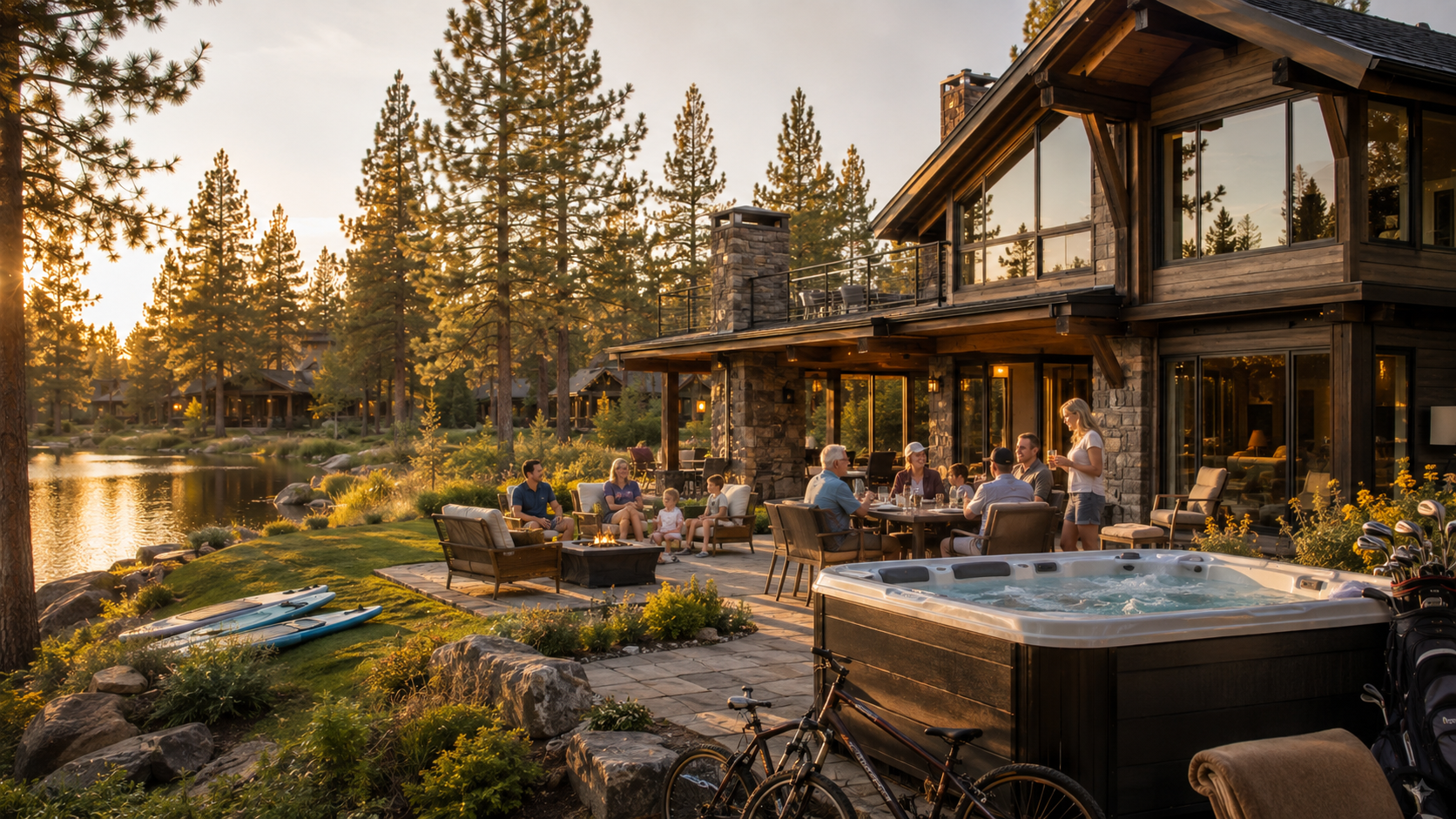
Start with the part no spreadsheet captures. When you own here, you are not booking a hotel room and living out of a suitcase. You have a familiar place with your own bedrooms, a full kitchen, laundry, a garage for bikes and skis, a deck and, in many homes, a hot tub. Your belongings stay onsite. Planning a trip stops being a project and becomes a decision to simply go.
Over the years, that consistency becomes tradition. The same summer week every July. Thanksgiving with the whole family under one roof. A recurring ski trip the kids grow up expecting. A home gives those rituals a permanent address, which is something a rental reservation never quite delivers.
A community built around recreation
The second benefit is everything waiting outside your door. Caldera Springs spreads across roughly 1,000 acres and was designed so that recreation lives inside or right around the community. Owners have access to pools and outdoor spas, more than 13 miles of trails, lakes and streams for canoeing, kayaking and paddleboarding, catch-and-release fishing, a family-friendly executive golf course, tennis, pickleball and basketball, playgrounds and parks, a dog park and even a sledding hill, plus restaurants and gathering spaces.
Recent additions have raised the bar further. The Forest House, which opened in 2024, brought multiple pools, a double-racer water slide, bowling, fitness facilities, a family room and dining. The reimagined Lake House offers indoor and outdoor dining overlooking Obsidian Lake. And Caldera Links access fees are included in owner assessments, so the golf is part of the package rather than an add-on. Beyond the gates, Mt. Bachelor, the Cascade Lakes and Bend are all close, giving you the best of a private resort community with a real city fifteen miles up the road.
Rental income as a carrying-cost offset
Now the financial side, described the right way. Any second home costs money whether or not you are in it. Mortgage, property taxes, insurance, association assessments, utilities, maintenance, landscaping and snow management continue every month. A home that only sees its owners a few weeks a year still runs up all of those bills.
This is where renting earns its place. During the weeks you are not using the home, guest income can help offset those carrying costs. Notice the word: offset, not erase. The published rental-program examples give a sense of scale, and they are worth quoting carefully. Sunriver Resort Vacation Properties' March 2026 guide shows a Forestbrook three-bedroom residence with an average gross revenue of about $74,000 a year, and a studio residence at about $16,000. Those are gross averages before expenses, not take-home profit, and not a promise for any specific home. After management commissions, cleaning, booking fees, maintenance, insurance, assessments and taxes, the net number is meaningfully lower. The right expectation is a home that helps carry itself, not one that mints money while you sleep.
Flexible floor plans that widen the audience
One of the smarter design ideas at Caldera Springs is the lock-off layout found in Forestbrook and Lakeside homes: a main residence paired with a separately rentable studio that has its own entrance, bathroom, kitchenette and patio. This flexibility lets a single property court very different guests. The studio can appeal to couples, wedding guests or shorter stays, while the main home draws families, ski groups and multigenerational travelers, and the combined home can host a large group that still wants some separation and privacy.
That range can help the property capture demand across more of the year. One honest caveat: whether you can occupy one portion while renting the other depends on the specific management agreement, the booking situation and the home's design, so it is a question to confirm for the exact property rather than to assume.
Professional care while you are away
For most owners, the home is not their primary residence, which makes management the quiet hero of the whole arrangement. An established onsite manager can handle reservations, housekeeping, linens, inspections, maintenance, guest communication, pricing and 24-hour guest support, along with the winter realities of a mountain home like snow response and protecting against frozen pipes.
This does not make ownership fully passive, and it is fair to say so. You still make decisions, cover expenses and keep the furnishings fresh. But professional management does mean you are not personally running a hospitality business from three hours or three states away.
Balancing enjoyment and revenue
The best part of owning here is that you get to choose your own balance, and there is no single right answer. A revenue-minded owner might keep the highest-value dates, July, the Fourth, Christmas through New Year's, Presidents' Day, open for guests, and take personal trips in April, May, October or early December instead. A balanced owner might claim one prime summer week and one winter holiday, use a few shoulder-season weekends, and rent the rest, accepting that peak personal use trims gross revenue. A lifestyle-first owner might reserve the major holidays and several summer weeks, offer the home when convenient, and value family access over yield, often choosing a custom single-family home for the added scheduling freedom that comes with not being a designated Overnight Lodging Unit.
The trade-off underneath all three is the same: the dates you most want for yourself are often the dates guests will pay the most to book. Using a shoulder-season week instead of a peak week is the simplest way to enjoy the home while protecting its most valuable rental inventory.
Who this really fits
The strongest Caldera Springs buyer already wants to own in Central Oregon, can comfortably afford the home without depending on a perfect rental year, values personal use, keeps financial reserves and understands that furnishings and upkeep are part of the deal. It fits less well for someone who needs rental income to cover every expense, expects steady monthly income, or is buying purely because of a revenue figure they saw once.
If you see yourself in the first group, the next step is not a leap of faith. It is a careful look at a specific property: its classification, its rental history, its true carrying costs and how its calendar lines up with the way your family actually vacations. That is exactly the work we do at Tuttle and Tuttle. Reach out and we will help you weigh the lifestyle and the numbers together, honestly, so you can decide whether owning here is the right fit for you.