How Owning a Vacation Rental in Caldera Springs Actually Works
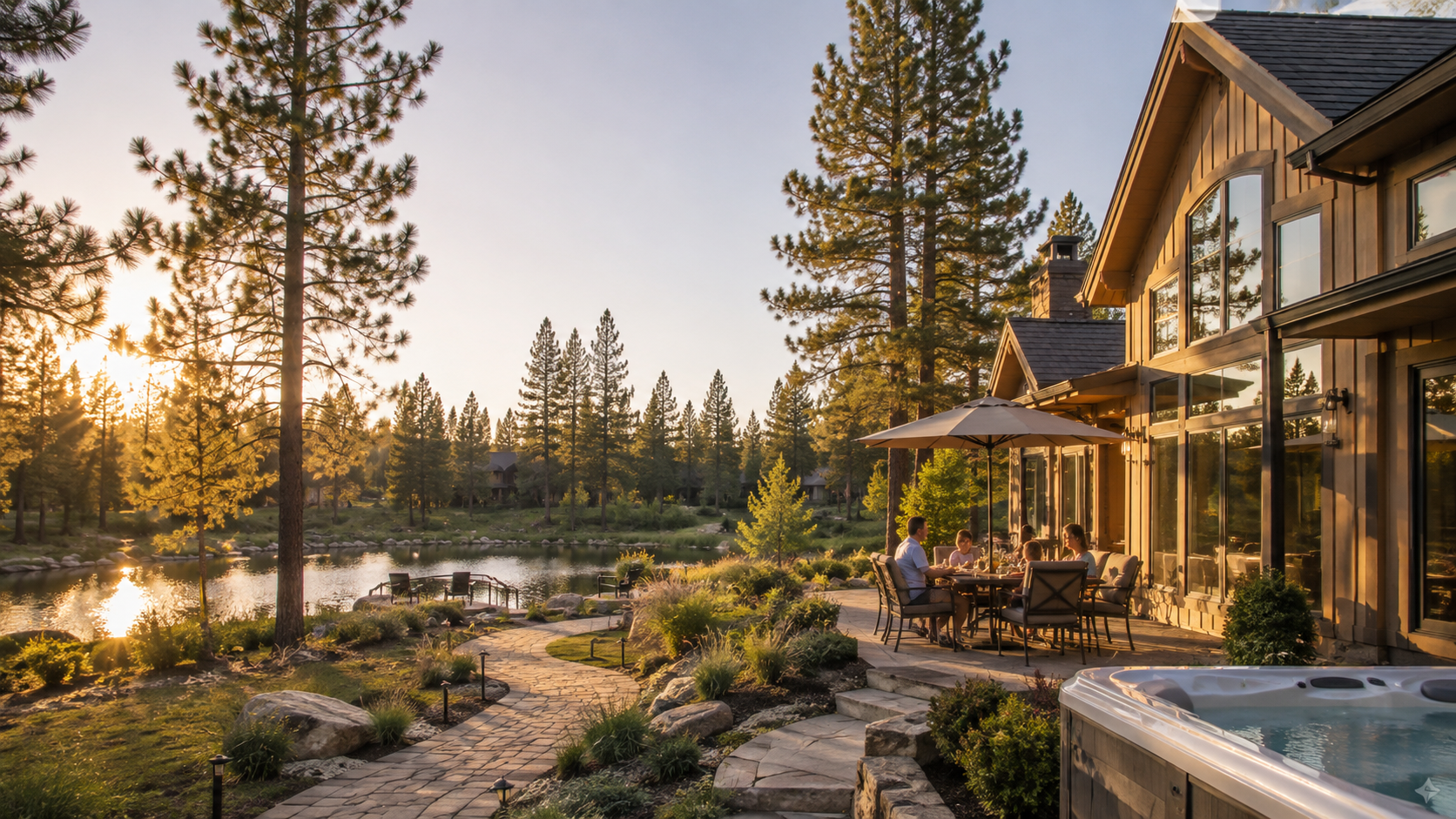
If you have spent time in Central Oregon, you already understand the pull of Caldera Springs. It sits on about 1,000 acres near Sunriver, roughly 15 miles south of Bend, with Mt. Bachelor, the Cascade Lakes and the Deschutes River all close by. Inside its boundaries you will find lakes and streams, miles of trails, pools, a golf course, sports courts, restaurants and a 220-acre wildlife preserve. It is the kind of place people visit once and start imagining owning.
That daydream usually arrives with a practical question close behind: Can I own a home here, use it for my own family, and rent it out when I am not around? The short answer is yes. The longer and more useful answer is that Caldera Springs is not one single kind of property with one set of rules. Before you fall for a specific home, it helps to understand how ownership here is actually structured.
Caldera Springs is a resort community, not a subdivision
Caldera Springs was established as a destination resort under Oregon law and Deschutes County regulations. That legal foundation matters. Destination resorts are built to welcome a large seasonal and visiting population alongside full-time and part-time residents. In plain terms, this is a community designed with rentals in mind, and overnight rentals are permitted. You are not fighting an association that wishes guests would disappear. Renting is part of the original plan.
But "rentals are permitted" is where the nuance begins, because different property types carry different obligations.
The four main property types
There are four categories a buyer will typically encounter, plus undeveloped homesites.
Custom single-family homes are individually designed and built on traditional Caldera Springs lots. These tend to be the largest and most personalized properties, often four to six bedrooms with high-end finishes, big outdoor living spaces and room for a crowd. Importantly, the community's ordinary single-family lots do not carry the same minimum rental-availability requirement that applies to designated rental units. That does not mean they are exempt from every rule, but it does give owners more freedom to decide how often, and whether, they rent.
Caldera Cabins are privately owned vacation homes in the established part of the community, ranging from roughly 1,400 to 2,600 square feet and available for guest rental. The original Caldera Springs phase included 45 cabins, and some configurations can be divided into different rentable spaces depending on the original design.
Forestbrook homes were purpose-built to blend personal use with rental flexibility. A Forestbrook home can include a main residence plus an attached studio with its own entrance, bathroom, kitchenette and patio. Depending on the floor plan and how it is booked, the property can function as a studio, a larger residence, or a combined home sleeping one to four bedrooms' worth of guests.
Lakeside homes are a newer product built on a similar idea: a three-bedroom main home paired with a separately rentable studio, again with its own entrance, bathroom, kitchenette and patio.
Understanding which of these you are buying is the single most important step, because it determines the rules that follow.
The term you need to know: Overnight Lodging Unit
The biggest dividing line in Caldera Springs is between ordinary single-family homes and properties designated as Overnight Lodging Units, usually shortened to OLUs.
Forestbrook and Lakeside homes are OLUs. Caldera Cabins are part of the community's overnight-lodging inventory as well. Custom single-family lots generally are not subject to the same OLU availability rule.
Why does this matter so much? Because OLUs come with a specific commitment.
What the 38-week requirement really means
An OLU must be made available for public rental for at least 38 weeks each calendar year. That number tends to make buyers nervous at first, so let's be precise about it.
Thirty-eight weeks equals 266 days. But this is an availability obligation, not an occupancy guarantee. Your home does not have to be booked or occupied for 266 days. It simply has to be offered for rent for that portion of the year through an approved reservation system or a licensed property manager. Whether guests actually book those nights depends on the market.
Read the other direction, 38 weeks of required availability still leaves room for personal use across the year. And on a Forestbrook or Lakeside home, the requirement applies to each separately rentable portion, which is part of what makes those lock-off designs so flexible.
If maximum scheduling freedom is your priority, a custom single-family home may suit you better, since those lots do not carry the same availability rule. If you like the idea of a purpose-built rental with a studio you can market separately, an OLU may be exactly right. Neither is better in the abstract. It depends on how you plan to use the place.
How the money side is structured
Ownership costs go well beyond the purchase price, and they vary by property type. A few 2026 figures give you a feel for the landscape.
The standard Caldera Springs Owners' Association assessment is $360 per month, or $4,320 a year, covering common-area services like roads, snowplowing, trails and lakes. Caldera Cabin owners pay a higher assessment of $640 per month, or $7,680 a year, because it bundles cabin-specific services with the master association. Forestbrook owners pay the standard $360 monthly assessment plus a separate landscaping assessment of $3,744.36 a year, billed April through November, plus metered water. That puts a Forestbrook owner's known association-and-landscaping base at roughly $8,064 before water, insurance, utilities and management.
There are also one-time items at closing, such as a working-capital contribution, and for those building from scratch, design-review costs that in 2026 included a $7,000 review-and-completion fee, a $7,500 refundable construction deposit and a $1,250 address-sign fee. None of this is meant to scare you off. It is meant to make the point that every property has its own ledger, and you will want the full picture for the specific home you are considering.
How rental management works
Most owners here do not run the home themselves. Sunriver Resort Vacation Properties is the onsite manager affiliated with the developer, and it handles marketing, distribution across major booking channels, dynamic pricing, housekeeping, linens, inspections, maintenance, 24-hour guest support, concierge services and resort transportation. You get an owner portal and monthly reporting. Owners may also use another qualifying licensed property manager, subject to the property's governing requirements.
Here is a point worth slowing down on: different management programs may offer guests different levels of amenity access. Some programs unlock a broader slice of the Sunriver Resort experience, including additional golf, the spa and aquatic facilities, along with resort transportation. Because a richer guest experience can support higher nightly rates and more bookings, comparing managers on commission rate alone can be misleading. A lower percentage does not automatically mean more money in your pocket if the home ends up with lower rates or fewer reservations.
Setting your calendar
Once you own, you decide which dates to keep for yourself and release the rest for rentals, subject to the 38-week rule if your home is an OLU. The most consequential choice is not how many days you use, but which days. A week in October and the week of the Fourth of July both contain seven nights, but they are worth very different amounts. Using the home during peak season carries a real opportunity cost, a theme worth its own conversation.
The takeaway
Caldera Springs is not a uniform product, and that is a feature, not a flaw. Custom homes, cabins, Forestbrook and Lakeside all offer distinct blends of freedom, flexibility and rental structure. The right choice comes down to reading the specifics: the deed, the CC&Rs, any supplemental declarations, the association budgets, the management agreement and the OLU status of the exact home.
That is where local guidance pays for itself. At Tuttle and Tuttle, we help buyers sort through property classifications, governing documents, association costs, management options and rental histories so you understand exactly what you are buying before you commit. If you are weighing a home here, reach out and we will walk through the details for the specific property on your mind.0