Central Oregon Real Estate News

Sept. 7, 2026

The Lifestyle and Financial Benefits of Owning a Vacation Home in Caldera Springs

The Lifestyle and Financial Benefits of Owning a Vacation Home in Caldera Springs

There is a particular kind of buyer who is drawn to Caldera Springs, and it is usually not the person hunting for a hands-off income machine. It is the person who already loves Central Oregon and wants a home base here, a place for ski weekends and summer reunions and lazy September golf, that can also help pay for itself by welcoming guests when the family is not around.

That distinction matters, so let's be honest about it up front. A Caldera Springs home is not a guaranteed passive-income investment, and anyone who tells you it "pays for itself" is skipping past the fine print. The more accurate and, in our experience, more satisfying way to think about it is this: you are buying a high-end Central Oregon retreat you can genuinely enjoy, with the ability to earn rental income during the stretches when it would otherwise sit empty. When you frame ownership that way, the benefits line up nicely.

A basecamp that is truly yours

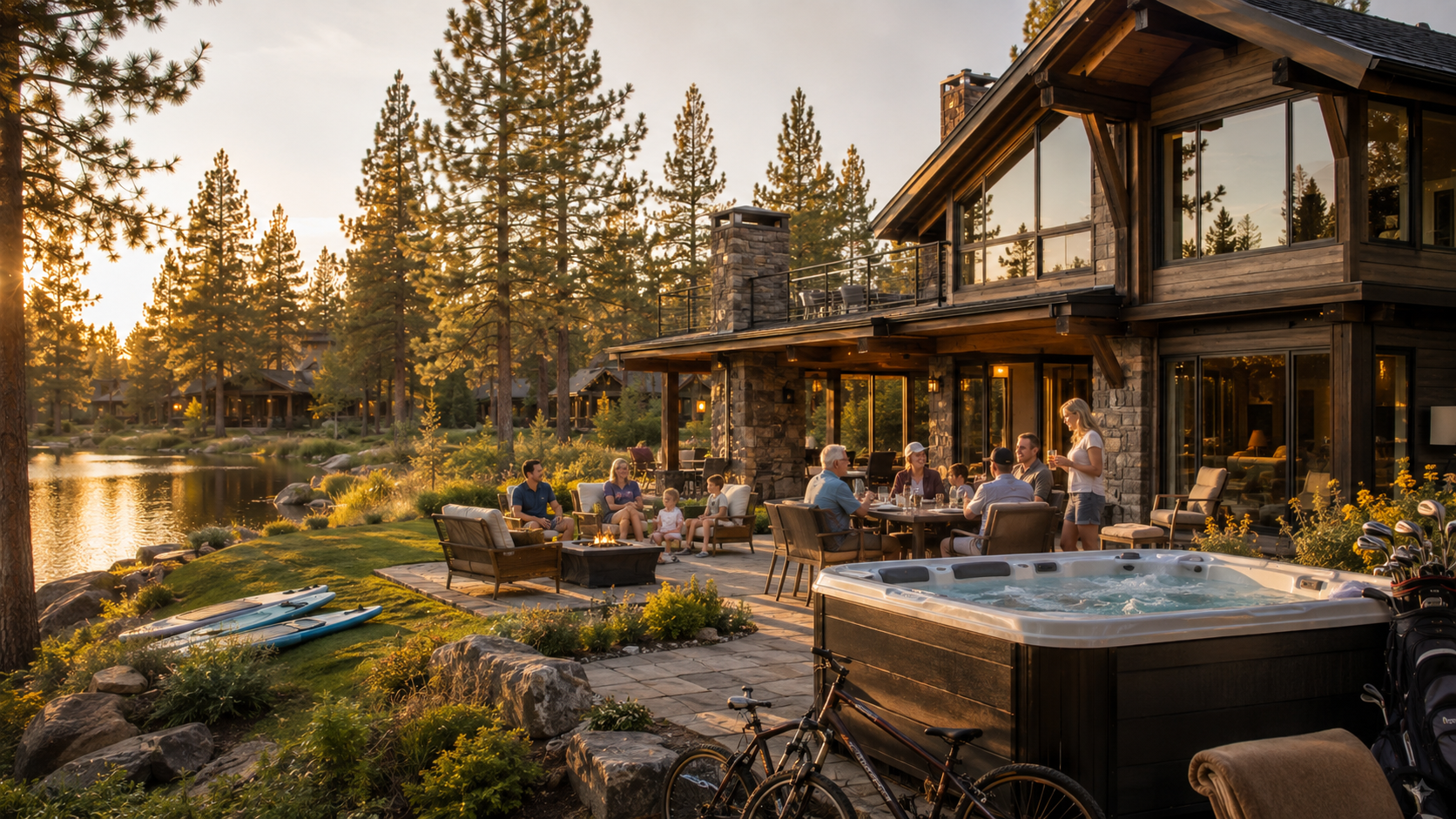
Start with the part no spreadsheet captures. When you own here, you are not booking a hotel room and living out of a suitcase. You have a familiar place with your own bedrooms, a full kitchen, laundry, a garage for bikes and skis, a deck and, in many homes, a hot tub. Your belongings stay onsite. Planning a trip stops being a project and becomes a decision to simply go.

Over the years, that consistency becomes tradition. The same summer week every July. Thanksgiving with the whole family under one roof. A recurring ski trip the kids grow up expecting. A home gives those rituals a permanent address, which is something a rental reservation never quite delivers.

A community built around recreation

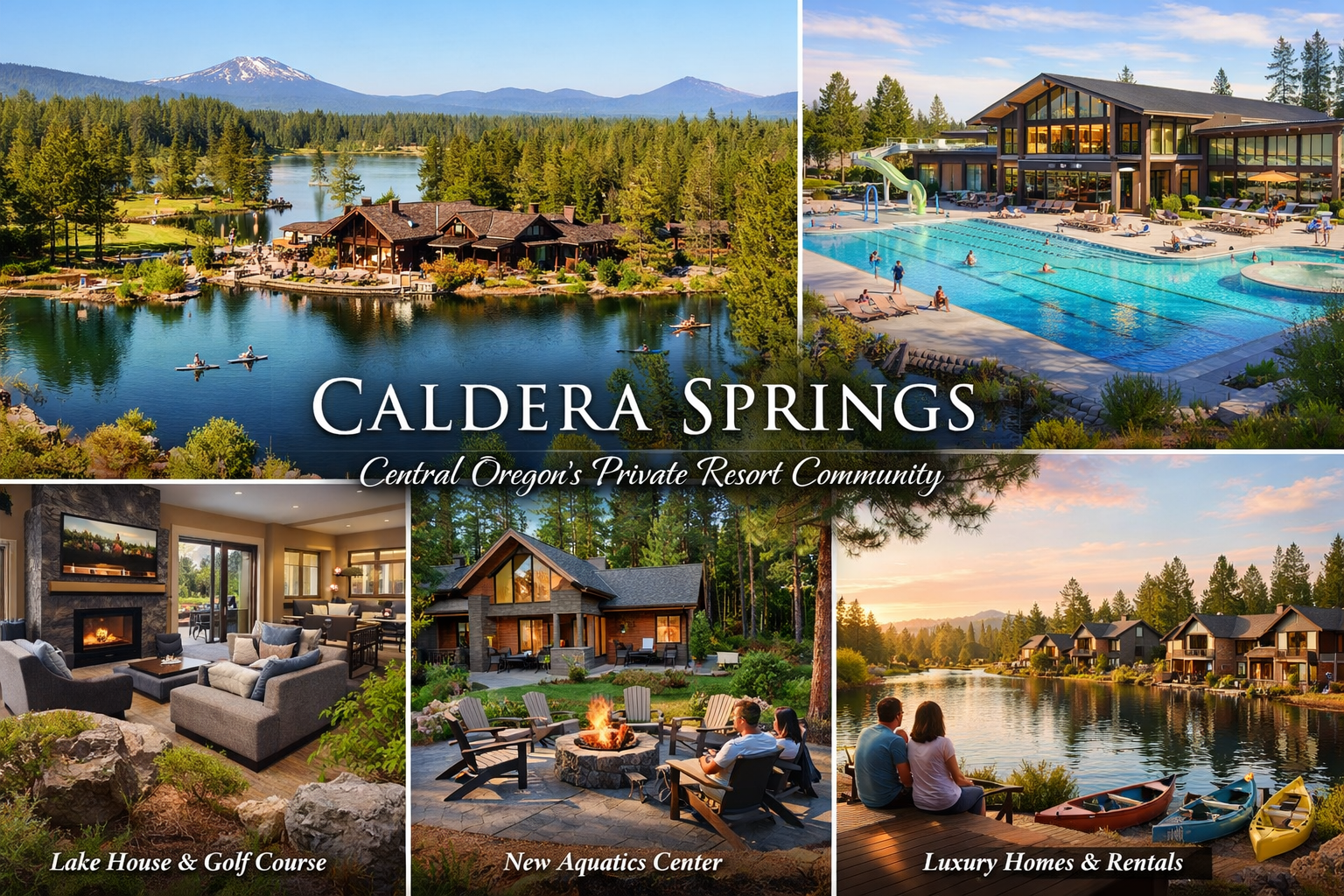
The second benefit is everything waiting outside your door. Caldera Springs spreads across roughly 1,000 acres and was designed so that recreation lives inside or right around the community. Owners have access to pools and outdoor spas, more than 13 miles of trails, lakes and streams for canoeing, kayaking and paddleboarding, catch-and-release fishing, a family-friendly executive golf course, tennis, pickleball and basketball, playgrounds and parks, a dog park and even a sledding hill, plus restaurants and gathering spaces.

Recent additions have raised the bar further. The Forest House, which opened in 2024, brought multiple pools, a double-racer water slide, bowling, fitness facilities, a family room and dining. The reimagined Lake House offers indoor and outdoor dining overlooking Obsidian Lake. And Caldera Links access fees are included in owner assessments, so the golf is part of the package rather than an add-on. Beyond the gates, Mt. Bachelor, the Cascade Lakes and Bend are all close, giving you the best of a private resort community with a real city fifteen miles up the road.

Rental income as a carrying-cost offset

Now the financial side, described the right way. Any second home costs money whether or not you are in it. Mortgage, property taxes, insurance, association assessments, utilities, maintenance, landscaping and snow management continue every month. A home that only sees its owners a few weeks a year still runs up all of those bills.

This is where renting earns its place. During the weeks you are not using the home, guest income can help offset those carrying costs. Notice the word: offset, not erase. The published rental-program examples give a sense of scale, and they are worth quoting carefully. Sunriver Resort Vacation Properties' March 2026 guide shows a Forestbrook three-bedroom residence with an average gross revenue of about $74,000 a year, and a studio residence at about $16,000. Those are gross averages before expenses, not take-home profit, and not a promise for any specific home. After management commissions, cleaning, booking fees, maintenance, insurance, assessments and taxes, the net number is meaningfully lower. The right expectation is a home that helps carry itself, not one that mints money while you sleep.

Flexible floor plans that widen the audience

One of the smarter design ideas at Caldera Springs is the lock-off layout found in Forestbrook and Lakeside homes: a main residence paired with a separately rentable studio that has its own entrance, bathroom, kitchenette and patio. This flexibility lets a single property court very different guests. The studio can appeal to couples, wedding guests or shorter stays, while the main home draws families, ski groups and multigenerational travelers, and the combined home can host a large group that still wants some separation and privacy.

That range can help the property capture demand across more of the year. One honest caveat: whether you can occupy one portion while renting the other depends on the specific management agreement, the booking situation and the home's design, so it is a question to confirm for the exact property rather than to assume.

Professional care while you are away

For most owners, the home is not their primary residence, which makes management the quiet hero of the whole arrangement. An established onsite manager can handle reservations, housekeeping, linens, inspections, maintenance, guest communication, pricing and 24-hour guest support, along with the winter realities of a mountain home like snow response and protecting against frozen pipes.

This does not make ownership fully passive, and it is fair to say so. You still make decisions, cover expenses and keep the furnishings fresh. But professional management does mean you are not personally running a hospitality business from three hours or three states away.

Balancing enjoyment and revenue

The best part of owning here is that you get to choose your own balance, and there is no single right answer. A revenue-minded owner might keep the highest-value dates, July, the Fourth, Christmas through New Year's, Presidents' Day, open for guests, and take personal trips in April, May, October or early December instead. A balanced owner might claim one prime summer week and one winter holiday, use a few shoulder-season weekends, and rent the rest, accepting that peak personal use trims gross revenue. A lifestyle-first owner might reserve the major holidays and several summer weeks, offer the home when convenient, and value family access over yield, often choosing a custom single-family home for the added scheduling freedom that comes with not being a designated Overnight Lodging Unit.

The trade-off underneath all three is the same: the dates you most want for yourself are often the dates guests will pay the most to book. Using a shoulder-season week instead of a peak week is the simplest way to enjoy the home while protecting its most valuable rental inventory.

Who this really fits

The strongest Caldera Springs buyer already wants to own in Central Oregon, can comfortably afford the home without depending on a perfect rental year, values personal use, keeps financial reserves and understands that furnishings and upkeep are part of the deal. It fits less well for someone who needs rental income to cover every expense, expects steady monthly income, or is buying purely because of a revenue figure they saw once.


If you see yourself in the first group, the next step is not a leap of faith. It is a careful look at a specific property: its classification, its rental history, its true carrying costs and how its calendar lines up with the way your family actually vacations. That is exactly the work we do at Tuttle and Tuttle. Reach out and we will help you weigh the lifestyle and the numbers together, honestly, so you can decide whether owning here is the right fit for you.
Aug. 31, 2026

When Do Caldera Springs Vacation Rentals Perform Best? A Guide to Seasons and Holidays

When Do Caldera Springs Vacation Rentals Perform Best? A Guide to Seasons and Holidays

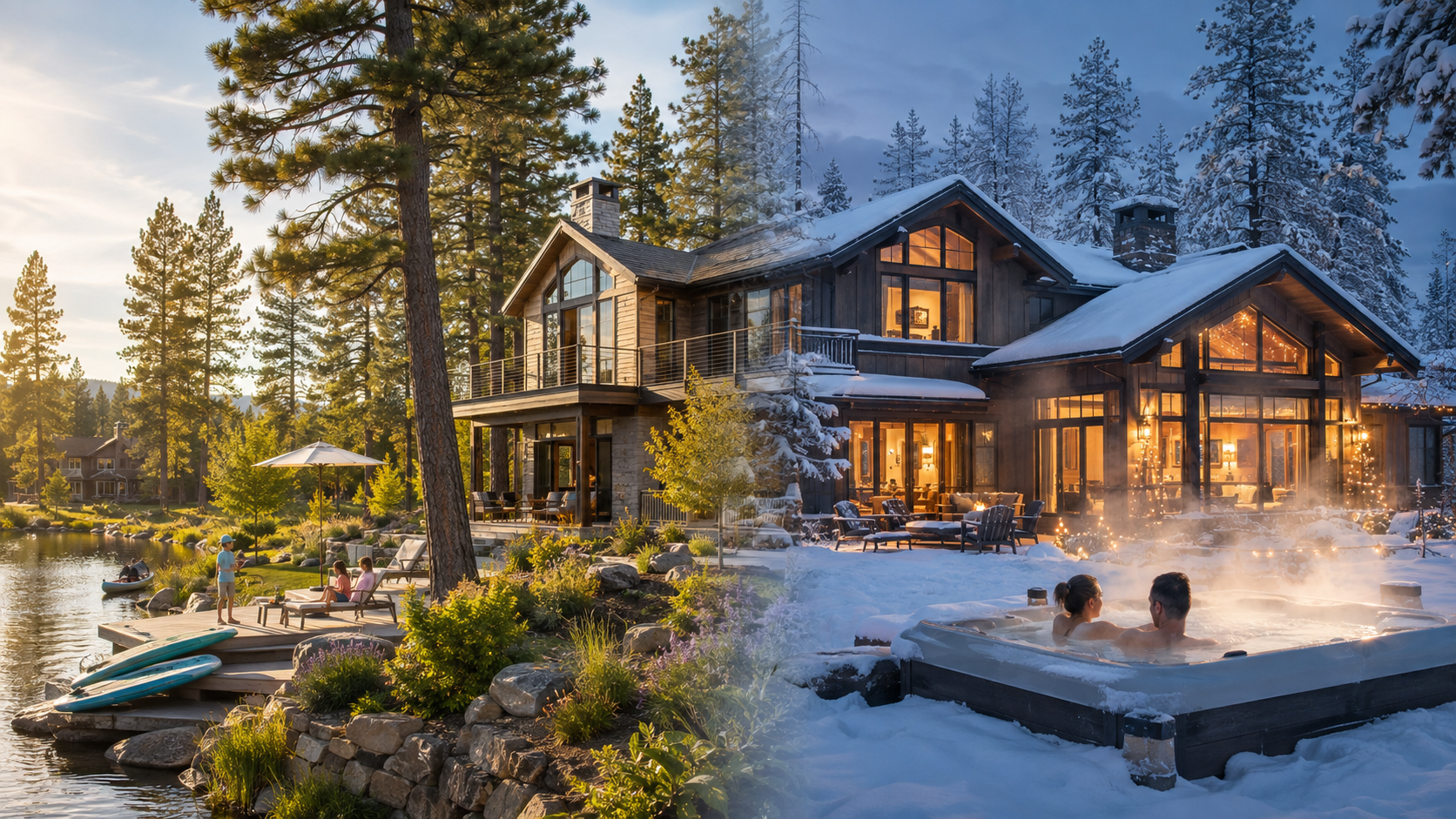
Ask any Central Oregon owner when their vacation home earns its keep, and the calendar tells the story. Rental demand here is not a flat line across twelve months. It rises and falls with school schedules, the weather, the ski season and a handful of holidays that travelers plan around. If you are thinking about buying in Caldera Springs, understanding this rhythm is one of the most useful things you can do, because it shapes both what the home can earn and when you will want to use it yourself.

A quick and important note before the numbers: every rental figure in this article is a gross average before expenses, drawn from published rental-program examples. It is not profit, and it is not a promise for any particular home. Actual results depend on the property, its condition, its floor plan, how it is managed and how the owner uses it. With that framing in place, let's walk through the year.

Summer is the engine

If Caldera Springs has a season that carries the calendar, it is summer. June, July and August are when the broader Sunriver market reaches its highest occupancy, and the published Forestbrook revenue illustrations show the same pattern. The reasons are easy to see when you are standing here in July. School is out. The weather is warm and dry. The pools are open, the lake is busy with paddleboards and kayaks, the golf course is in full swing and the trails are perfect. Families travel together, weddings fill weekends, and stays run longer than they do in the off-season.

To put a number on the appeal, the Sunriver Resort Vacation Properties management guide from March 2026 offers a Forestbrook three-bedroom example with a peak-season average rate of $618 per night, compared with $328 in the off-season. That gap between peak and off-peak is the whole story of seasonality in a single line.

Why July is the crown jewel

Among the strong months, July stands out. The latest Forestbrook revenue graphics show July producing the highest monthly gross revenue in the examples given. It is the collision of everything good for a vacation rental: the Fourth of July holiday, peak school vacation, reliably warm weather, every outdoor amenity running at full tilt and plenty of regional events.

For an owner, that has a flip side worth stating plainly. Because July is the most valuable month, blocking the home for your own use during July carries the greatest opportunity cost of any time all year. A July family week for yourself is wonderful. Just know that it is also the most expensive week to keep off the rental market.

The Fourth of July

The Fourth sits right in the center of that peak, and demand around it runs very high. Expect higher nightly rates, longer minimum stays, earlier booking and strong interest from families and multigenerational groups looking for larger homes with decks, hot tubs and room to gather. If your goal leans toward revenue, this is a weekend to protect for guests unless the holiday means more to your own family than the income it would generate.

August, then Labor Day

August stays near the top. Schools in many feeder markets have not resumed, the weather holds, and families squeeze in final trips as demand stretches toward Labor Day. It is worth acknowledging that August can occasionally be disrupted by wildfire smoke or extreme heat, which vary a great deal from year to year and should be planned for without being treated as inevitable.

Labor Day weekend then acts as the last big summer hurrah, with high holiday-weekend demand even when the weeks that follow soften. It is a valuable rental block, especially for larger homes.

The shoulder months

June and September bracket the peak, and they behave differently at their edges. Early June often starts below July but strengthens quickly as schools release; the second half of June can feel much more like peak season, supported by weddings, golf and long daylight. September works in reverse. Labor Day can pull peak demand into early September, but the rest of the month settles into a shoulder period as school resumes. September still appeals to couples, retirees, golfers and remote workers who like thinner crowds and mild weather, so a well-positioned home can still do meaningful business. Just don't expect it to match July.

These shoulder windows matter for a second reason: they are excellent times to use the home yourself. A September golf weekend or a late-June getaway lets you enjoy Central Oregon while leaving the very highest-value dates available for guests.

Winter has its own peaks

Central Oregon is a two-season rental market, and winter demand rides on Mt. Bachelor. Outside the holidays, ordinary ski-weekend demand is variable, depending heavily on snowfall, mountain operations, road conditions and how far ahead people book. But the holidays themselves create some of the strongest winter blocks of the year.

Thanksgiving brings a meaningful uptick, with families seeking larger homes that offer real kitchens, multiple bedrooms, hot tubs and fireplaces. Even in a low-snow year, people still travel for the gathering itself.

Christmas through New Year's is one of the strongest winter periods, full stop. It combines school vacation, family travel, Mt. Bachelor ski demand and holiday traditions, with longer stays and premium demand for fireplaces, hot tubs and big kitchens. Tellingly, Sunriver promotions routinely exclude Christmas and New Year's from discounted shoulder-season offers, which is exactly what you would expect from high-demand dates. Treat this as one of the most valuable winter blocks you own.

Presidents' Day weekend is a strong winter weekend thanks to Mt. Bachelor and school breaks, drawing ski groups and drive-market families for three- and four-night stays.

Spring break runs moderate to strong depending on the calendar and the snow. Because it is spread across different school districts, it does not compress into one exact week, but it is another period operators treat differently from ordinary low season, and it is frequently excluded from broad discount offers.

Memorial Day and the quiet stretches

Memorial Day weekend marks the seasonal turn, roughly when Quarry Pool and lake recreation traditionally open. It may not equal July, but it delivers a holiday-weekend bump and a running start into stronger June bookings.

The genuinely quiet stretches, early January after New Year's, April, early May, October and early December, are softer for rentals. That is not bad news for an owner. Those are often the best windows for personal use, maintenance and refreshing the home, precisely because you are not giving up peak income to enjoy them.

Reading the pattern for your own home

One more useful signal from the published examples: the three-bedroom Forestbrook illustration shows more meaningful winter activity than the studio illustration. That suggests larger, family-oriented layouts may be better positioned to capture holiday and ski-group demand, though that is an interpretation rather than a guarantee.

The lesson underneath all of this is simple. A home's annual result is not just about how many nights are available. It is about whether the home is available during the highest-value weeks. Two owners with identical properties can see very different returns purely because of which dates they kept for themselves.


That is the conversation worth having before you buy. At Tuttle and Tuttle, we can look at a specific home's rental history, its seasonal booking pattern and its published rates, then talk through a calendar strategy that fits how you actually want to use the place. If you would like to see how a particular property has performed across the seasons, get in touch and we will pull the details together.

Aug. 25, 2026

How Owning a Vacation Rental in Caldera Springs Actually Works

How Owning a Vacation Rental in Caldera Springs Actually Works

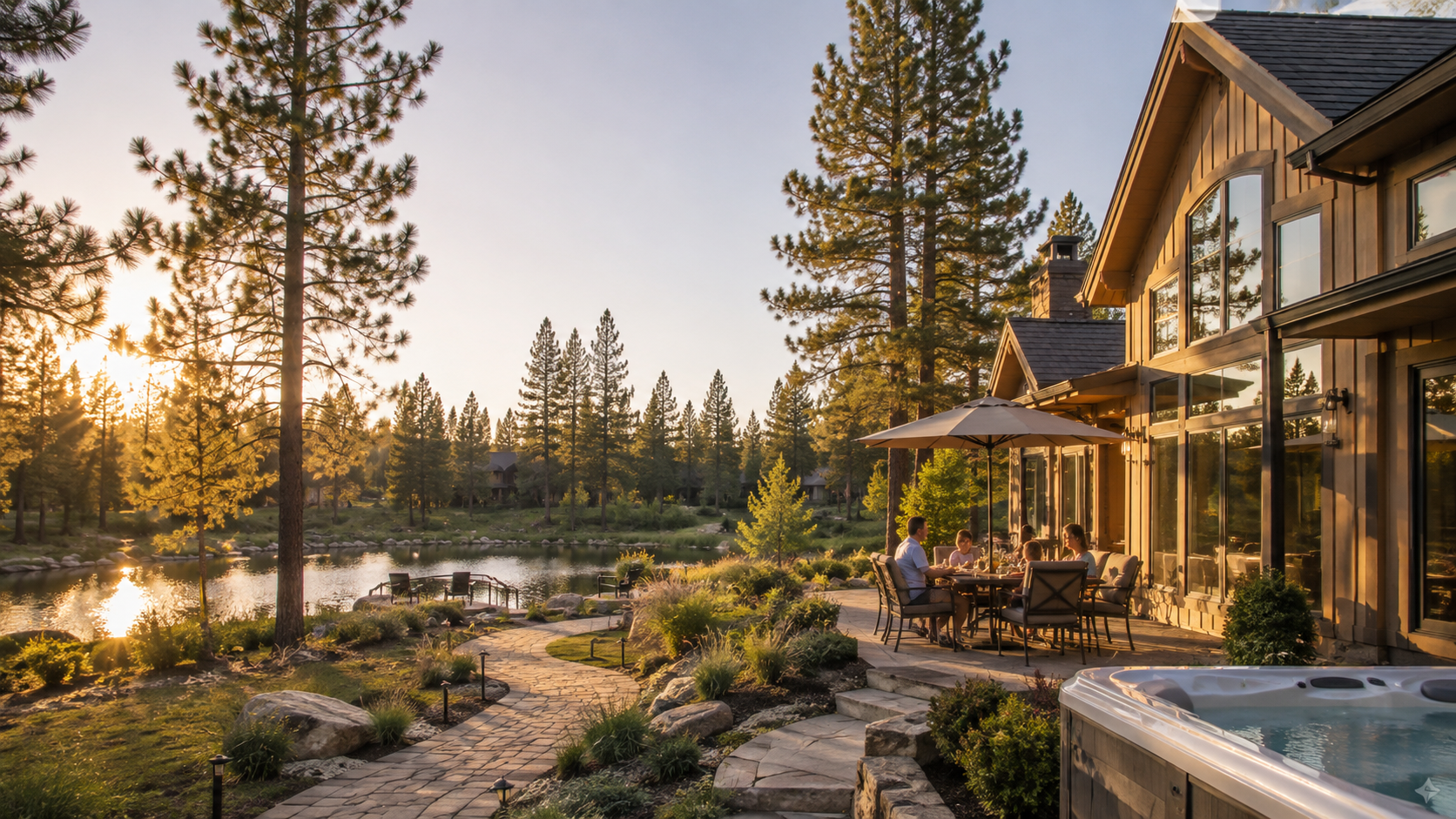
If you have spent time in Central Oregon, you already understand the pull of Caldera Springs. It sits on about 1,000 acres near Sunriver, roughly 15 miles south of Bend, with Mt. Bachelor, the Cascade Lakes and the Deschutes River all close by. Inside its boundaries you will find lakes and streams, miles of trails, pools, a golf course, sports courts, restaurants and a 220-acre wildlife preserve. It is the kind of place people visit once and start imagining owning.

That daydream usually arrives with a practical question close behind: Can I own a home here, use it for my own family, and rent it out when I am not around? The short answer is yes. The longer and more useful answer is that Caldera Springs is not one single kind of property with one set of rules. Before you fall for a specific home, it helps to understand how ownership here is actually structured.

Caldera Springs is a resort community, not a subdivision

Caldera Springs was established as a destination resort under Oregon law and Deschutes County regulations. That legal foundation matters. Destination resorts are built to welcome a large seasonal and visiting population alongside full-time and part-time residents. In plain terms, this is a community designed with rentals in mind, and overnight rentals are permitted. You are not fighting an association that wishes guests would disappear. Renting is part of the original plan.

But "rentals are permitted" is where the nuance begins, because different property types carry different obligations.

The four main property types

There are four categories a buyer will typically encounter, plus undeveloped homesites.

Custom single-family homes are individually designed and built on traditional Caldera Springs lots. These tend to be the largest and most personalized properties, often four to six bedrooms with high-end finishes, big outdoor living spaces and room for a crowd. Importantly, the community's ordinary single-family lots do not carry the same minimum rental-availability requirement that applies to designated rental units. That does not mean they are exempt from every rule, but it does give owners more freedom to decide how often, and whether, they rent.

Caldera Cabins are privately owned vacation homes in the established part of the community, ranging from roughly 1,400 to 2,600 square feet and available for guest rental. The original Caldera Springs phase included 45 cabins, and some configurations can be divided into different rentable spaces depending on the original design.

Forestbrook homes were purpose-built to blend personal use with rental flexibility. A Forestbrook home can include a main residence plus an attached studio with its own entrance, bathroom, kitchenette and patio. Depending on the floor plan and how it is booked, the property can function as a studio, a larger residence, or a combined home sleeping one to four bedrooms' worth of guests.

Lakeside homes are a newer product built on a similar idea: a three-bedroom main home paired with a separately rentable studio, again with its own entrance, bathroom, kitchenette and patio.

Understanding which of these you are buying is the single most important step, because it determines the rules that follow.

The term you need to know: Overnight Lodging Unit

The biggest dividing line in Caldera Springs is between ordinary single-family homes and properties designated as Overnight Lodging Units, usually shortened to OLUs.

Forestbrook and Lakeside homes are OLUs. Caldera Cabins are part of the community's overnight-lodging inventory as well. Custom single-family lots generally are not subject to the same OLU availability rule.

Why does this matter so much? Because OLUs come with a specific commitment.

What the 38-week requirement really means

An OLU must be made available for public rental for at least 38 weeks each calendar year. That number tends to make buyers nervous at first, so let's be precise about it.

Thirty-eight weeks equals 266 days. But this is an availability obligation, not an occupancy guarantee. Your home does not have to be booked or occupied for 266 days. It simply has to be offered for rent for that portion of the year through an approved reservation system or a licensed property manager. Whether guests actually book those nights depends on the market.

Read the other direction, 38 weeks of required availability still leaves room for personal use across the year. And on a Forestbrook or Lakeside home, the requirement applies to each separately rentable portion, which is part of what makes those lock-off designs so flexible.

If maximum scheduling freedom is your priority, a custom single-family home may suit you better, since those lots do not carry the same availability rule. If you like the idea of a purpose-built rental with a studio you can market separately, an OLU may be exactly right. Neither is better in the abstract. It depends on how you plan to use the place.

How the money side is structured

Ownership costs go well beyond the purchase price, and they vary by property type. A few 2026 figures give you a feel for the landscape.

The standard Caldera Springs Owners' Association assessment is $360 per month, or $4,320 a year, covering common-area services like roads, snowplowing, trails and lakes. Caldera Cabin owners pay a higher assessment of $640 per month, or $7,680 a year, because it bundles cabin-specific services with the master association. Forestbrook owners pay the standard $360 monthly assessment plus a separate landscaping assessment of $3,744.36 a year, billed April through November, plus metered water. That puts a Forestbrook owner's known association-and-landscaping base at roughly $8,064 before water, insurance, utilities and management.

There are also one-time items at closing, such as a working-capital contribution, and for those building from scratch, design-review costs that in 2026 included a $7,000 review-and-completion fee, a $7,500 refundable construction deposit and a $1,250 address-sign fee. None of this is meant to scare you off. It is meant to make the point that every property has its own ledger, and you will want the full picture for the specific home you are considering.

How rental management works

Most owners here do not run the home themselves. Sunriver Resort Vacation Properties is the onsite manager affiliated with the developer, and it handles marketing, distribution across major booking channels, dynamic pricing, housekeeping, linens, inspections, maintenance, 24-hour guest support, concierge services and resort transportation. You get an owner portal and monthly reporting. Owners may also use another qualifying licensed property manager, subject to the property's governing requirements.

Here is a point worth slowing down on: different management programs may offer guests different levels of amenity access. Some programs unlock a broader slice of the Sunriver Resort experience, including additional golf, the spa and aquatic facilities, along with resort transportation. Because a richer guest experience can support higher nightly rates and more bookings, comparing managers on commission rate alone can be misleading. A lower percentage does not automatically mean more money in your pocket if the home ends up with lower rates or fewer reservations.

Setting your calendar

Once you own, you decide which dates to keep for yourself and release the rest for rentals, subject to the 38-week rule if your home is an OLU. The most consequential choice is not how many days you use, but which days. A week in October and the week of the Fourth of July both contain seven nights, but they are worth very different amounts. Using the home during peak season carries a real opportunity cost, a theme worth its own conversation.

The takeaway

Caldera Springs is not a uniform product, and that is a feature, not a flaw. Custom homes, cabins, Forestbrook and Lakeside all offer distinct blends of freedom, flexibility and rental structure. The right choice comes down to reading the specifics: the deed, the CC&Rs, any supplemental declarations, the association budgets, the management agreement and the OLU status of the exact home.


That is where local guidance pays for itself. At Tuttle and Tuttle, we help buyers sort through property classifications, governing documents, association costs, management options and rental histories so you understand exactly what you are buying before you commit. If you are weighing a home here, reach out and we will walk through the details for the specific property on your mind.0

June 23, 2026

What's Actually Happening in Central Oregon Real Estate Right Now

What's Actually Happening in Central Oregon Real Estate Right Now

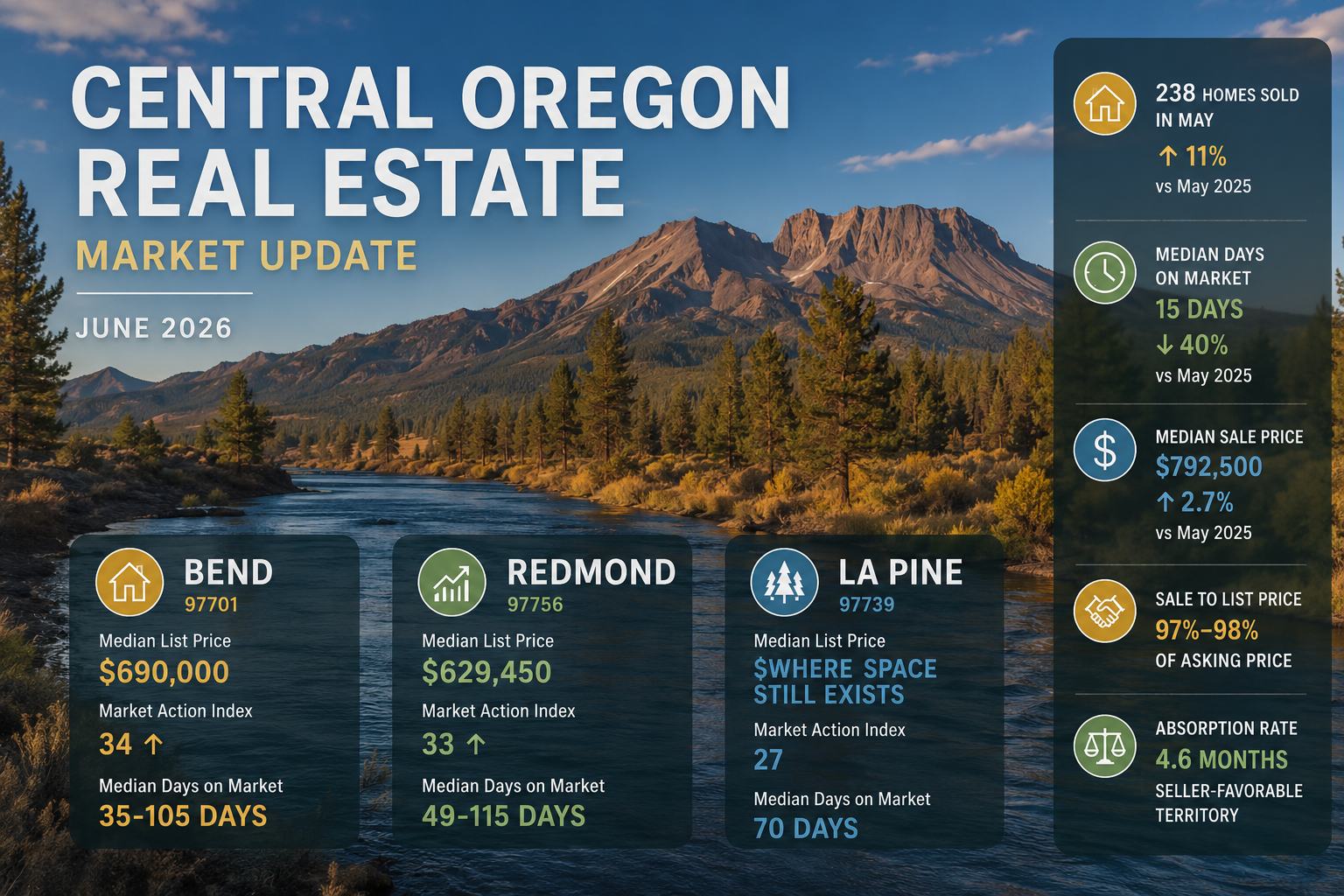
June 2026 | Central Oregon Market Update


If you have been watching the real estate market in Central Oregon, whether you own here, are thinking about making a move, or just like to keep tabs on things, June has some interesting signals worth paying attention to.

Here is what the data is telling us, and what it means for you.


The Regional Picture

Nationally, the conversation around real estate keeps circling back to two things: inventory and interest rates. Inventory has crept back up in many parts of the country, but it still has not fully recovered to pre-pandemic levels. And mortgage rates have kept a meaningful chunk of would-be sellers "locked in" (the phenomena of sellers reluctant to trade their existing rate for a new one). Central Oregon is living that same story. But our market has stayed active in ways that a lot of other regions have not.

In May, 238 homes sold across the Bend area. That is an 11% increase over the same month last year. At the same time, active listings actually dropped nearly 9% compared to May 2025. More buyers, fewer homes. You know where that math leads.

The median sale price is sitting at $792,500, up about 2.7% from a year ago. Homes are selling in a median of just 15 days, which is 40% faster than this time last year. And sellers are landing at 97%-98% of their asking price on average. This is not a soft market.


The COVID Pricing Conversation Nobody Wants to Have

During 2020 through 2022, the combination of record-low interest rates, remote work migration, and frenzied bidding wars pushed prices in Central Oregon to levels that, looking back, were not fully sustainable. Properties were going for tens of thousands over ask. People were waiving inspections. It felt like the rules had changed permanently.

They did not.

Prices have corrected from those peaks. Not catastrophically, but meaningfully. And the sellers who are finding success right now are the ones who have internalized that. They are pricing based on where the market actually is in 2026, not where it was in 2021. Those homes are moving. In many cases, they are moving fast.

The listings that are sitting, and right now, nearly half of active listings across the region have already taken a price reduction, are largely the ones anchored to that COVID-era peak. It is not that buyers are not out there. It is that buyers are doing their homework, and they are not paying 2022 prices in a 2026 market.

The good news is that current values are genuinely strong. Sellers who price to the 2026 market are still walking away with excellent outcomes. The equity is there. The demand is there. The right strategy just looks a little different than it did four years ago.


Breaking It Down by Area

Bend — 97701

The median list price in Bend is $690,000, and the Market Action Index (which measures the balance between supply and demand) is at 34 and ticking upward from last month's 33. That is seller's territory, and the trend is moving in the right direction for anyone who owns here.

New listings are entering the market at a median of $614,250, which is notably below the overall median. That gap reflects the broader pricing dynamic: the homes coming in priced for today's market are getting absorbed. Inventory has grown to 177 homes, which gives buyers slightly more to look at than earlier this year, but sales are still outpacing supply.

The market segments tell a useful story. The entry-tier homes (under $533K) are selling fastest: about 35 days on market. Move into the mid-range ($625K–$799K) and you are looking at 42 to 52 days. The upper tier over a million dollars takes longer, around 105 days, but it is still moving. Every segment of this market is active.

Redmond — 97756

Redmond is the most compelling story in Central Oregon right now. The median list price is $629,450, but new listings are hitting the market at a median of $834,950. That $200,000 gap tells you what sellers entering the market believe, that values are heading higher, and the data supports some optimism there. The MAI is 33, up from 32 last month, and the market narrative describes Redmond as approaching its all-time high.

For context, the entry tier here starts around $450K and is moving in about 49 days. Mid-market homes in the $550K–$730K range are active. The upper tier near $1.15M is more selective, but it is transacting.

If you own in Redmond, you are likely sitting on equity at or near its peak. That is a meaningful position to be in.

La Pine — 97739

La Pine reads differently than the other two markets, and that is worth understanding clearly.

The Market Action Index there is 27: a slight buyer's advantage. Inventory has grown to 187 homes, the highest relative to demand of the three areas we track. The median days on market is 70, which is meaningfully longer than Bend or Redmond.

What that means in plain terms: buyers in La Pine have more time, more choices, and more room to negotiate than they do anywhere else in Central Oregon right now. For sellers, it reinforces the pricing point above — the homes that are succeeding there are the ones priced to the current market, not to a previous one.

What La Pine offers that Bend and Redmond simply cannot is land. Half-acre to full-acre lots start around $378K. One to two and a half acre properties sit in the $479K–$569K range. If space, privacy, and value are the priority, this is where Central Oregon's best case is right now.


What This Means If You Own Property Here

Your equity position is real. Values have held near their highs (and in most pockets, they continue to climb) which puts current owners in a genuinely strong place. The absorption rate across the region has tightened to 4.6 months, below the 6-month threshold that traditionally marks a balanced market. We are still in seller-favorable territory, and that trend has been building all spring.

The opportunity is not gone. But markets shift, and the window that is open today will not be open forever. If you have been thinking about making a move, whether that is upsizing, downsizing, pulling equity to invest elsewhere, or exploring what your property is worth, now is a good time to have that conversation.

I track this data every week and I am happy to dig into what it means for your specific address. Reach out anytime.


Data sourced from First American Title Market Reports and MLS summary data for the Bend, OR area as of June 22, 2026. Market statistics reflect single-family residential properties.


June 16, 2026

Nobody Ever Looked Back and Wished They Hadn't Bought

Nobody Ever Looked Back and Wished They Hadn't Bought

There is a saying that floats around real estate circles so often it's almost become background noise: nobody ever regretted buying a home. Like most clichés, it survives because it keeps proving itself true. Over the years of working in Central Oregon real estate, I can tell you it's not sales pitch folklore. It's what the data consistently shows, and what I've watched play out in the lives of the people I work with.

So let's actually talk about why.


Your Mortgage Is the One Bill That Never Goes Up

Here's something worth sitting with: rent goes up. It has always gone up. Outside of rent-controlled markets (which make up a tiny fraction of housing in the country, and essentially none in Central Oregon) your landlord can, and will, raise your rent. Nationally, rents are projected to increase 3 to 4 percent annually through 2026, and that's considered a modest forecast compared to what we've seen in recent years.

Your mortgage payment, on the other hand, is fixed. The principal and interest you agreed to on day one is the same number you'll write the check for 10 years from now. While your neighbor's rent climbs a few hundred dollars, you're still paying the same amount you were when you moved in.

And that's before you factor in refinancing. When interest rates drop, you have the ability to refinance your loan and lock in a lower rate, reducing your monthly payment. You can also refinance once you've paid down enough principal to lower your payment without rates moving at all. Renters have no equivalent lever. Their options are pay more or move.

This sounds straightforward but the long-term math is striking. Over a decade, the divergence between what a renter pays and what a homeowner pays can be significant; and the renter has nothing to show for any of it.


You Are Building Something While You Sleep

Every month that you make a mortgage payment, two things happen. You reduce what you owe, and your home likely goes up in value. That combination is called equity, and it is the foundational mechanism of how most Americans build real wealth.

According to the Federal Reserve's Survey of Consumer Finances, the median net worth of a homeowner in the United States is approximately $400,000. The median net worth of a renter is $10,400. That's not a typo. We're talking about a gap of nearly 40 to 1, and it has been widening. The National Association of Realtors, extrapolating from the same Federal Reserve data, puts the 2025 figures at $430,000 for homeowners versus $10,000 for renters — a 43 to 1 difference.

Home equity alone accounts for roughly half of a homeowner's net worth. The rest comes from the financial stability and discipline that tends to accompany owning property. But the equity is where it starts.

On the appreciation side, U.S. homes have historically increased in value at an average of roughly 4 to 5 percent annually over the long term, based on Federal Housing Finance Agency data going back to the 1970s. That's a 60-year track record. Even people who purchased near the peak of the 2006 housing bubble (arguably one of the worst possible times in modern history to buy) were, in most cases, back above water within seven to ten years and meaningfully ahead after that. The people who got hurt in 2008 were largely those who took on loans they couldn't sustain, not people who simply bought a home with a reasonable payment.

In Central Oregon, this story looks even better. Our market has outperformed national averages through multiple cycles, driven by the kind of lifestyle demand that doesn't evaporate when things get harder nationally. People want to live here. That doesn't change.


The "Just Rent and Invest the Difference" Argument

You've probably heard this one. The case goes: if your mortgage payment is higher than what you'd pay in rent, take the difference and invest it in the stock market. Over time, the stock market has historically outperformed real estate on a pure return basis.

This is a real argument, and in a spreadsheet it can hold up. But here's what the spreadsheet doesn't capture.

First, about 38 percent of Americans have no stake in the stock market whatsoever, according to Gallup. Not a brokerage account. Not an IRA. Nothing. Among households earning under $50,000 a year, that number drops further (only about 28 percent own any stock at all). The theoretical "invest the difference" strategy requires the discipline to actually invest it. The data says most people don't.

Second, roughly 27 percent of Americans have less than $1,000 in savings, according to a Bankrate survey. Only 46 percent of U.S. adults have enough emergency savings to cover three months of expenses. This isn't a judgment on anyone, rather it reflects how hard it is to consistently save and invest in an environment where costs keep rising. But it does matter for the math. The "invest the surplus" approach works if you actually put the money somewhere. Statistically, a large share of people spend it instead.

A mortgage is, in this sense, a forced savings account. Every month you make the payment, you own a little more of a real asset. You don't have to remember to transfer money. You don't have to resist the temptation to spend it. The equity builds whether you're being disciplined or not.

This is one of the most underrated aspects of homeownership, and it's why the Federal Reserve's own data keeps showing what it shows.


What Actually Makes the Difference: Buying Right

None of the above is an argument that everyone should buy a home regardless of their circumstances. It's an argument that people who buy in a healthy financial position almost always come out ahead over time; hence the cliché we started with. 

So what does a healthy buying position actually look like?

A fully funded emergency reserve is the starting point. Before taking on a mortgage, you want three to six months of living expenses in liquid savings. This is what protects you when the water heater fails, when you need a new roof, or when your employment situation changes. Buying a home without that cushion is what turns manageable situations into stressful ones.

Debt-to-income ratio matters more than most people realize. Lenders typically cap the back-end ratio (all your monthly debts divided by your gross monthly income) at around 43 to 45 percent. But in my experience working with buyers in Central Oregon, the people who feel best about their purchase long-term are those who keep that number meaningfully lower. A payment you can make comfortably feels different than one that requires everything to go right every month.

Stable employment is the third leg of the stool. That doesn't mean you need to have been at the same employer for a decade. Lenders generally want to see two years of consistent income in the same field. But more than lender requirements, it's about your own confidence in your financial picture. If your income is steady and your foundation is solid, a mortgage becomes one of the best financial tools you have access to.

If those three things are in place: an emergency fund, a manageable payment relative to your income, and stable employment, the question shifts from whether buying is a good idea to when and where. 


What This Looks Like in Central Oregon Right Now

Our market is in an interesting moment. Inventory has grown across Bend and the surrounding area. About 42 percent of active listings have taken a price reduction from their original ask. Median days on market is sitting at 56 days, but the average is over 100, which tells you that well-priced homes are still moving, while sellers who overreach are waiting.

For someone who's in a healthy buying position, this is genuinely one of the better environments we've seen in a few years to make a move. You have more homes to look at, more room to negotiate, and sellers who are more realistic than they were in 2021 or 2022.

For people who already own in Central Oregon, the data continues to support what you probably already feel: you made a good call. Equity in this market has compounded meaningfully, and the long-term fundamentals (limited land, strong in-migration, lifestyle demand that holds up through economic cycles) remain intact.


The Bottom Line

The reason the saying persists is not because real estate is magic. It's because owning a home, for most people in most circumstances, is the most accessible and reliable path to building real wealth that this country has. Not because it's guaranteed to go up in any given year. Not because it's without risk. But because over time, it builds equity, it hedges against rising housing costs, and it functions as a savings vehicle that works even for people who struggle to save in other ways.

The folks who bought in the worst year in modern memory still came out ahead. The data on homeowner net worth versus renter net worth says it plainly. And in a market like Central Oregon, where demand is structural and not just speculative, the case is even stronger.

If you're thinking about whether the time is right for you, I'd genuinely enjoy talking through it. Not a pitch, just a conversation about where you are financially, what you're looking for, and whether the numbers make sense for your situation. That's what we do, and it's where we can add the most value.

Reach out anytime. There's no pressure and no obligation. Just someone who knows this market well, and who's happy to share what we're seeing on the ground.


March 31, 2026

Major Infrastructure Projects Shaping Our City

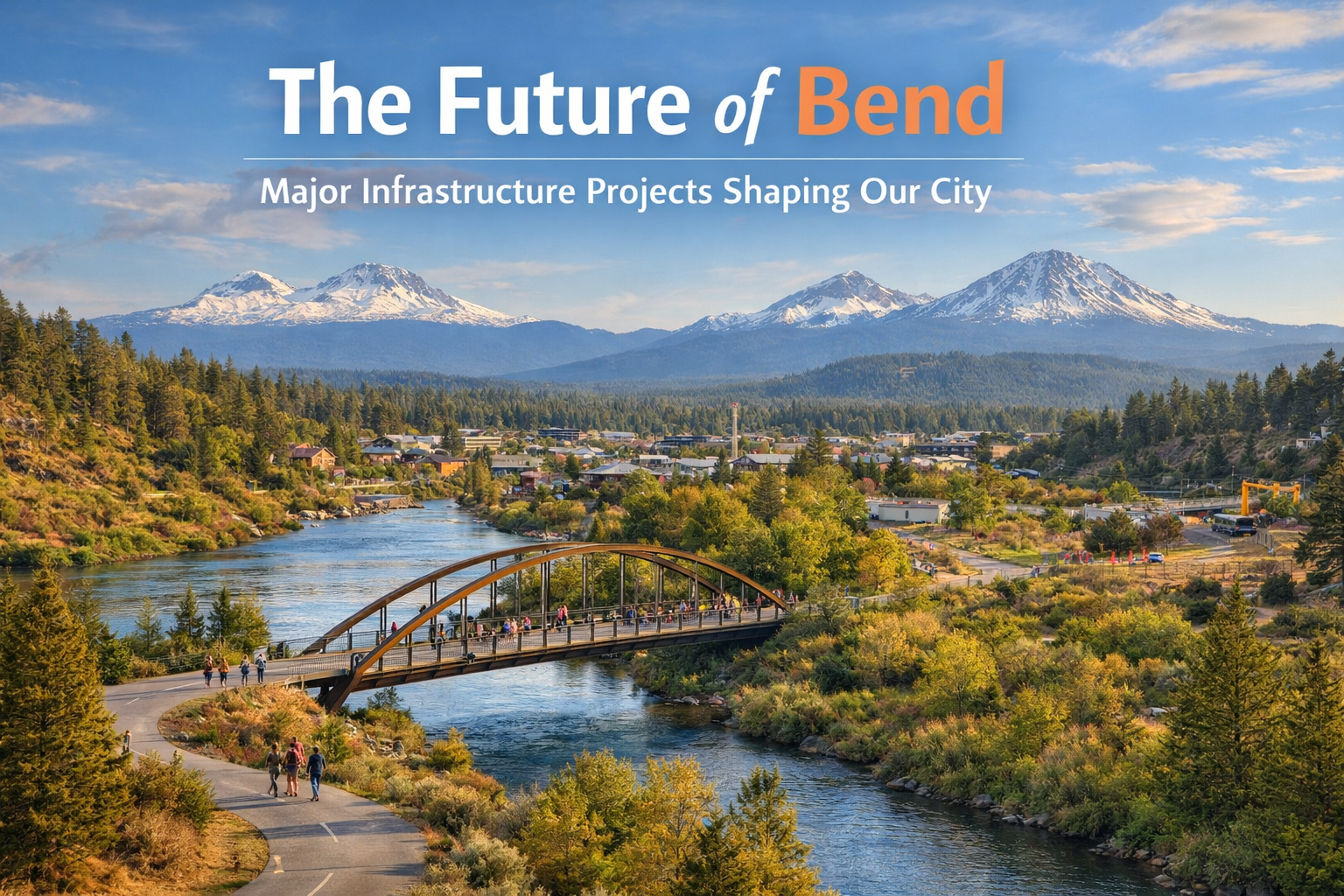
The Future of Bend:
Major Infrastructure Projects Shaping Our City

Why is Bend investing so heavily in infrastructure right now?

If you’ve been around Bend lately, you’ve probably noticed construction happening all over town. Roads are being expanded, trails are being connected, and new systems are being built beneath the surface.

So the big question is: Why is Bend investing so much into infrastructure right now?

The answer is simple.
Bend is growing, and the city is making sure that growth leads to a better quality of life, not a worse one.

Instead of reacting too late, Bend is planning ahead. These projects are designed to reduce traffic, improve access to nature, support new housing, and make daily life easier for the people who live here.

For anyone thinking about moving to Bend, or already lucky enough to call it home, this is a strong sign. It shows that this is a city that cares about its future.


A City That Plans Ahead

Growth can be a double-edged sword. Without the right planning, it can lead to crowded roads, stretched resources, and frustration.

But Bend is taking a different approach.

Across the city, you’ll find projects focused on:

  • Expanding major roadways
  • Improving intersections and traffic flow
  • Adding bike lanes and pedestrian paths
  • Upgrading water and utility systems

These aren’t just random upgrades. They are part of a long-term vision to keep Bend livable, connected, and enjoyable as more people arrive.

That matters. A city that plans ahead tends to stay strong over time.


Making Daily Life Easier

Let’s bring this down to real life.

Think about your day:

  • Getting to work
  • Dropping kids off at school
  • Heading out for a hike or bike ride
  • Running errands around town

Infrastructure improvements touch all of this.

Projects like road expansions and intersection upgrades help reduce bottlenecks. Trail connections make it easier to get outside without needing to drive. Even utility upgrades help ensure that homes and neighborhoods can grow without strain.

These improvements may not always be flashy, but they make a real difference in how a city feels to live in.


Protecting What Makes Bend Special

One of the biggest concerns people have about growth is this:
Will Bend lose what makes it special?

That’s a fair question.

What’s encouraging is that many of these projects are designed with Bend’s identity in mind. This isn’t about turning Bend into a big city. It’s about supporting the lifestyle that already exists here.

That includes:

  • Expanding access to trails and outdoor spaces
  • Improving walkability and bike access
  • Keeping neighborhoods connected rather than crowded

In other words, the goal is not just growth, it’s intentional growth.


What This Means for Homeowners

If you already live in Bend, these projects should give you confidence.

Infrastructure investment is one of the strongest signs of a healthy city. It often leads to:

  • More stable home values
  • Increased demand over time
  • Better long-term livability

When a city improves access, reduces congestion, and enhances lifestyle features, it becomes more attractive, not less.

Even small changes, like a new road connection or improved trail access, can have a meaningful impact on how desirable a neighborhood becomes.


What This Means for Buyers Considering Bend

If you’re thinking about moving to Bend, this is something you should pay attention to.

You’re not just buying a home, you’re buying into a city.

And Bend is showing clear signs that it is:

  • Investing in its future
  • Supporting its growth
  • Protecting its lifestyle

That combination is rare.

Many places grow quickly but struggle to keep up. Bend is working to stay ahead of that curve, which makes it an even more attractive place to put down roots.


A Quiet but Powerful Signal

Not all growth is obvious.

You might not notice a utility upgrade or a road redesign right away. But over time, these changes shape how a city feels.

They create:

  • Smoother commutes
  • Better access to recreation
  • Stronger, more connected communities

And most importantly, they create a sense of confidence.

Confidence that the place you live (or are considering moving to) is being cared for and thoughtfully developed.


Looking Ahead

Bend isn’t standing still. And that’s a good thing.

The projects happening today are laying the groundwork for the next 5, 10, and even 20 years. They are helping ensure that Bend remains a place where people can:

  • Live comfortably
  • Stay connected to nature
  • Build a life they’re proud of

That’s the kind of future worth investing in.


Frequently Asked Questions

Are these construction projects a bad sign for traffic right now?

In the short term, construction can cause minor delays. But these projects are designed to reduce traffic issues long-term and improve overall flow.

Will these projects affect home values?

Historically, infrastructure improvements tend to support and strengthen home values over time by increasing accessibility and desirability.

Are these changes making Bend too crowded?

The goal of these projects is actually the opposite: to manage growth in a way that keeps Bend livable and enjoyable.

Should I consider future infrastructure when buying a home?

Yes. Access, commute times, and nearby amenities can all impact both your lifestyle and long-term value.


Final Thoughts

Bend is growing, but it’s growing with intention.

That matters.

Whether you already live here or are thinking about making the move, these infrastructure projects are a strong signal that Bend is not just expanding, it’s evolving in the right way.


If you ever want help understanding how these changes might impact specific neighborhoods, home values, or future opportunities, we are always here to help. Our goal is to make sure you feel confident, informed, and excited about where you’re headed.

March 23, 2026

Bend Set to Transform Downtown with Exciting New Event Plaza

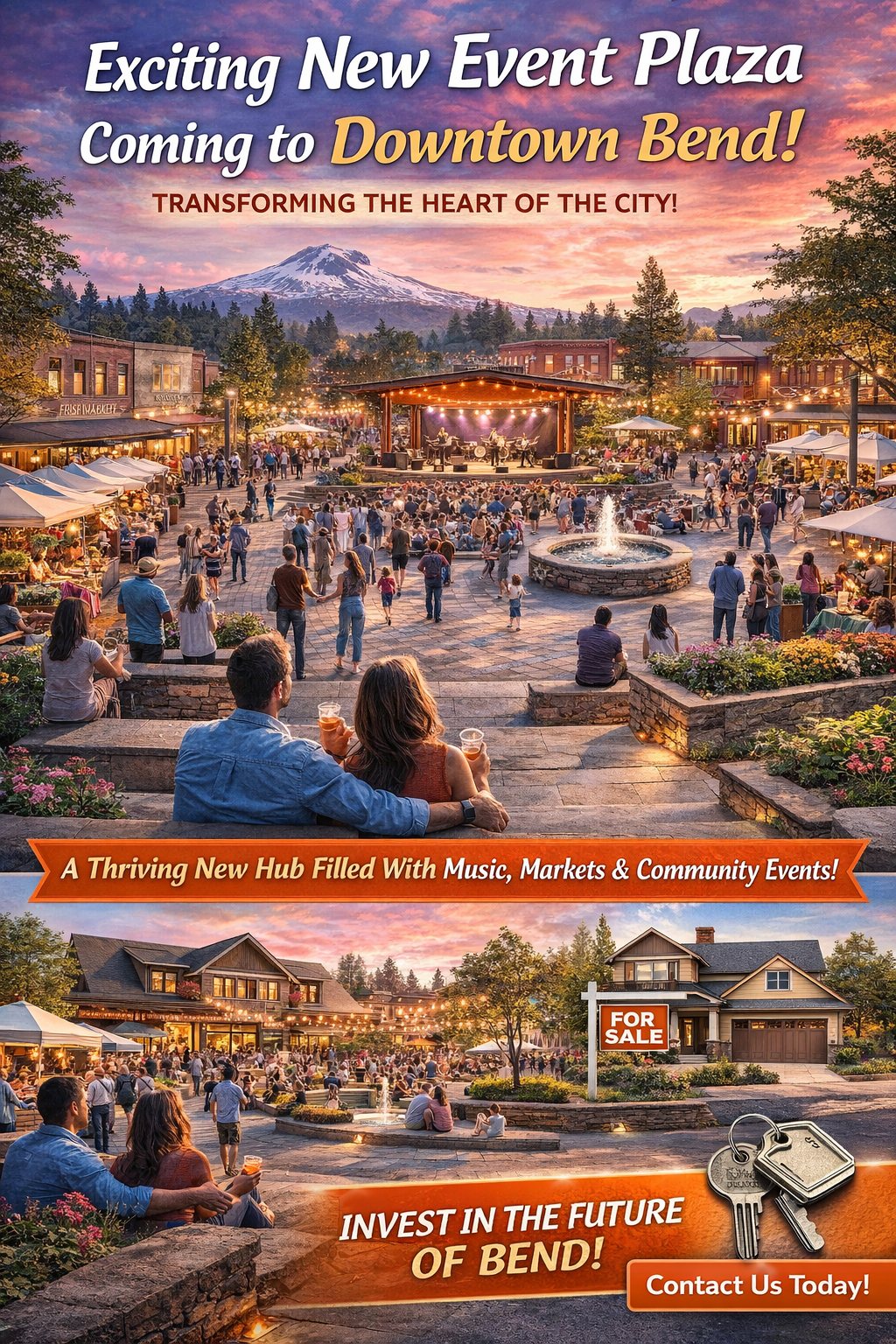
If you've been keeping up with the latest news and developments in Bend, Oregon, you've probably heard the buzz surrounding an ambitious new project that's in the works for the heart of the city's downtown district. City officials have unveiled plans for a sprawling new event plaza that would transform a prominent parking lot into a vibrant, year-round hub of activity - and it's the kind of transformation that's sure to have a major impact on Bend's thriving real estate market.

The proposed 1.5-acre plaza, which would be located on the corner of Bond and Oregon Streets, is envisioned as a dynamic public space that could host a wide variety of community events, from outdoor concerts and festivals to seasonal markets and art fairs. Renderings of the project showcase an inviting, open-air design with shaded seating areas, lush landscaping, and eye-catching architectural elements that would seamlessly blend the plaza with the surrounding historic buildings.

But beyond just serving as a gathering place for locals and visitors, this new event space could also have far-reaching implications for the future of downtown Bend. City planners believe the plaza has the potential to drive increased foot traffic, boost local businesses, and enhance the overall appeal and livability of the urban core - all of which could translate to significant gains for the real estate market.

"This project is really about so much more than just creating a nice public space," explained Bend City Councilor, Sarah Watkins. "It's about reinvigorating our downtown, attracting new residents and businesses, and solidifying Bend's reputation as one of the most vibrant and desirable communities in the Pacific Northwest."

And the timing couldn't be better. Bend has been experiencing remarkable growth in recent years, with people flocking to the area for its stunning natural beauty, thriving arts and culture scene, and unparalleled quality of life. This influx of new residents has fueled a booming real estate market, with home prices skyrocketing and inventory struggling to keep up with demand.

But the proposed event plaza could help ease some of that pressure by making downtown Bend an even more appealing destination for both prospective homebuyers and investors. Imagine strolling through a lively, pedestrian-friendly plaza on your way to browse the local boutiques and cafes, or attending a lively summer concert just steps from your front door. It's the kind of lifestyle that many people are craving, and the kind of community that real estate agents in Bend are eager to highlight.

"This plaza project is a game-changer for downtown Bend," said local real estate agent, Emily Nguyen. "It's going to transform the entire vibe and energy of the urban core, making it an even more attractive place for people to live, work, and play. And that's going to have a huge impact on the real estate market, driving up demand and values in the surrounding neighborhoods."

Of course, the plaza is still in the planning stages, and there's no guarantee that it will come to fruition. The city will need to secure funding and navigate the approval process before construction can begin. But with widespread community support and a clear vision for the project's potential impact, many are optimistic that this ambitious plan will become a reality sooner rather than later.

So if you've been considering a move to Bend, Oregon, now is the time to act. With an exciting new event plaza on the horizon and a real estate market that shows no signs of slowing down, there has never been a better opportunity to plant your roots in this thriving, vibrant community.

Our team of experienced real estate agents would be honored to help you find the perfect home, whether you're in the market for a cozy bungalow, a modern loft, or a spacious family home. We know the ins and outs of the Bend real estate scene, and we're committed to guiding you through every step of the process to ensure a smooth, stress-free transaction.

Don't wait - contact us today to start your journey to Bend, and get ready to experience all that this remarkable city has to offer. With a flourishing downtown, world-class recreation, and an unbeatable quality of life, Bend is poised to reach new heights in the years to come. We can't wait to welcome you home.

March 17, 2026

A New High-End Athletic Club is Coming to Skyliner Road

Bend, Oregon is quickly becoming a hub for outdoor recreation and wellness, and the latest addition to the city's booming fitness scene is sure to get people excited. A brand new, high-end athletic club is breaking ground on Skyliner Road, bringing world-class amenities and programming to fitness enthusiasts in Central Oregon.

The $35 million project, spearheaded by a team of experienced developers, will transform a 10-acre parcel of land into a state-of-the-art facility unlike anything else in the region. Spanning over 90,000 square feet, the club will boast an impressive array of features, from a resort-style pool complex complete with waterslides and a lazy river, to a massive fitness center stocked with the latest exercise equipment and studios for group classes.

But the real showstopper might just be the club's crown jewel - a massive indoor climbing wall that will allow members to scale new heights, quite literally. Standing at over 50 feet tall, this climbing wall will be one of the largest of its kind in the Pacific Northwest, offering routes for climbers of all skill levels.

Beyond the athletic facilities, the club will also feature luxurious amenities designed to help members relax and unwind. A full-service spa will offer massages, facials, and other pampering treatments, while a café and juice bar will fuel workout routines with healthy, delicious fare.

The project's developers say they were inspired by the active, outdoor-loving lifestyle that defines Bend, and they wanted to create a space that would cater to that community. "Bend is such a special place, with people who are passionate about fitness, adventure, and living life to the fullest," said lead developer, Jessica Ramirez. "We wanted to build something that would elevate the health and wellness experience in this town, giving our members access to world-class amenities right in their own backyard."

Construction on the new athletic club is slated to begin in the coming months, with an anticipated opening date sometime in late 2027. And locals are already buzzing with excitement. "This is exactly the kind of innovation and investment that Bend needs," said longtime resident, Michael Chen. "As the city continues to grow, it's so important that we have facilities that can keep up with the demand for premier fitness and recreation options."

Indeed, Bend has experienced remarkable growth in recent years, with people flocking to the area for its stunning natural beauty, vibrant culture, and unparalleled quality of life. And this new athletic club is poised to be a crown jewel in the city's bustling wellness scene, catering to both longtime residents and newcomers alike.

So if you're looking to live an active, healthy lifestyle in one of the Pacific Northwest's most desirable destinations, there has never been a better time to call Bend home. Our team of experienced real estate agents would be thrilled to help you find the perfect property, whether you're in the market for a cozy bungalow, a sleek modern home, or a sprawling mountain retreat. Contact us today to get started on your journey to Bend!

Feb. 12, 2026

New Trail Connection Approved: Expanding Access from Bend to the Lava Lands

New Trail Connection Approved: Expanding Access from Bend to the Lava Lands

Bend continues to grow in thoughtful and exciting ways.

A newly approved path connecting Bend to the Lava Lands area is another sign that this city is investing in its future. This project will create a safer and more direct way for people to explore one of Central Oregon’s most unique landscapes. For residents, that means easier access to trails, lava fields, forests, and wide-open views right from town.

Growth in Bend is not just about new homes or businesses. It is about connection.

The Lava Lands area, near the Lava Lands Visitor Center, is one of the most fascinating natural features in our region. Ancient lava flows stretch across the landscape, telling the story of Central Oregon’s volcanic past. With this new path, getting there becomes simpler and safer for walkers, runners, and cyclists. Instead of feeling separate from town, this natural wonder becomes part of everyday life.

That matters.

When cities invest in outdoor access, they are investing in quality of life. Bend has always been known for outdoor recreation, but projects like this show long-term planning. It is one thing to live near nature. It is another thing to have smooth, safe access to it.

The path will connect into areas of the Deschutes National Forest, expanding recreation opportunities for families, visitors, and longtime locals. Imagine biking from your neighborhood to a trailhead without needing to load up the car. Picture a Saturday morning walk that leads you from town into lava rock formations and pine forests.

That is the kind of growth that builds community.

As Bend continues to expand, city leaders are working to make sure development supports lifestyle. Trails, paths, and outdoor connections protect what makes this place special. They give children room to explore. They give adults room to breathe. And they help preserve the balance between progress and preservation.

For homebuyers, this type of infrastructure matters more than people sometimes realize.

Access to trails and outdoor amenities consistently supports long-term property values. Homes near well-planned recreation areas often attract strong interest because buyers are not just purchasing square footage. They are investing in daily experience. They are choosing morning trail runs, evening bike rides, and weekend adventures close to home.

That is part of what makes Bend different.

We are not growing for the sake of growth. We are growing with intention. Projects like this show that Bend is planning for the future while protecting the lifestyle people move here to enjoy. It signals stability, forward thinking, and community investment.

And for those considering a move, it sends a clear message: this is a city that believes in possibility.

Whether you are looking for a home near trail systems, river access, or quiet neighborhoods tucked against open land, understanding how Bend is developing can help you make a smart decision. The right location is not just about today. It is about where the city will be five, ten, or twenty years from now.

Bend is not standing still.

It is expanding thoughtfully. It is creating new ways to connect people to nature. It is building infrastructure that supports both adventure and everyday life. And it is doing it in a way that keeps the character of Central Oregon intact.

If you have been thinking about making Bend your home, now is a great time to explore what is available. Let’s talk about neighborhoods near trail access, upcoming developments, and the areas positioned for long-term growth.

The path to Lava Lands is about connection.

Your path to Bend can be too.

If you are curious about living near the action, investing in future growth, or simply learning more about what makes this community special, reach out. We would love to help you find not just a house, but a place that connects you to everything Bend has to offer.


Feb. 2, 2026

Living in Caldera Springs

Living in Caldera Springs

Refined Living in the Heart of Central Oregon

A private, nature-forward community designed for calm, connection, and long-term value

Caldera Springs offers a very different feeling from most communities in Central Oregon. This gated community, now thoughtfully expanding into its second phase of development, sits just south of Sunriver and is surrounded by forest, water, and preserved open space. From the moment you enter, it feels intentionally quiet and deeply connected to nature.

For many homeowners, Caldera Springs feels less like a neighborhood and more like a private retreat—one that still functions beautifully for everyday living, full-time residency, or high-quality vacation use.


A Community Built Around Nature and Privacy

One of the first things people notice about Caldera Springs is how naturally it blends into its surroundings. Homes are built on larger, well-spaced lots, carefully tucked among mature trees to preserve privacy and serenity. Trails, lakes, and open space are not add-ons here—they are the backbone of the community’s design.

Morning walks, bike rides, or evenings on the deck feel peaceful and unhurried. The layout creates calm without isolation, and refinement without excess.


Phase One: Established, Amenity-Rich, and Proven

The original phase of Caldera Springs is centered around the community’s iconic Lake House, which includes:

  • A well-regarded restaurant and gathering space

  • A resort-style pool and lakefront access

  • Pickleball courts and recreation amenities

  • A stocked fishing lake

  • An on-site golf course

This phase also includes a wide range of home sizes, with many 4-, 5-, 6-, and even 7-bedroom homes, making it especially attractive for larger families, multi-generational use, or vacation rental buyers.

The Cabins

Within Phase One are the highly popular Cabins, which are required to participate in the community rental program for 38 weeks per year. These properties have historically performed very well in rental income, making them appealing for buyers who want both personal enjoyment and strong income potential.


Phase Two: Contemporary Comfort Meets Woodsy Design

The second phase of Caldera Springs continues the community’s nature-first philosophy while introducing more contemporary interior design and updated amenities.

Aquatics Center

Phase Two is anchored by a large, modern aquatics center, offering expanded pool and recreation options that complement the quieter lake-focused experience of Phase One.

Custom Homes

Homes in this phase maintain the same forest-integrated feel on the exterior, while interiors lean more modern, well-appointed, and refined. The result is a balance of rustic surroundings and elevated, comfortable living.

Forestbrook Homes

A standout option in Phase Two is the Forestbrook residences, which—like the Cabins—require 38 weeks per year in the rental program. These are particularly unique because they feature a primary home and a separate studio, each of which can be rented independently. This flexibility is especially attractive for owners seeking diversified rental use without sacrificing personal enjoyment.

New Lake Homes

Construction has recently begun on lakefront homes around the smaller lake in Phase Two, adding a new layer of inventory that blends water access with the newer phase’s design and amenities.


Full-Time Living, Second Homes, and Vacation Rentals

Caldera Springs works exceptionally well as a full-time residence, offering privacy, security, and year-round livability. At the same time, it remains one of Central Oregon’s most sought-after vacation rental communities.

Its proximity to Sunriver, Mt. Bachelor, rivers, lakes, and the Cascade Lakes Highway makes it ideal for seasonal visitors, while the community’s management, amenities, and design support a true lock-and-leave lifestyle.


Connected to Everything That Matters

Despite its secluded feel, Caldera Springs is minutes from Sunriver’s dining and shopping, and a short drive to Bend’s healthcare, events, and cultural life. Skiing, biking, paddleboarding, fishing, and hiking are all close at hand, in every season.


A Lifestyle That Feels Grounded and Elevated

People choose Caldera Springs not for flash, but for balance. It offers refined living without crowds, privacy without isolation, and a sense of care that carries into daily life.

Whether you are looking for a peaceful primary residence, a retreat-style second home, or a high-quality vacation rental investment, Caldera Springs stands apart as a community built with intention—and designed to age beautifully over time.